
Ever since Trump’s election, gold investors have been looking forward to a real audit of the U.S. Treasury’s gold holdings. We’ve heard lots of big talk but not seen much action.
Recently, Senator Mike Lee (R-Utah) brought up a bill to audit America’s gold holdings.
The Gold Reserve Transparency Act would inventory, audit and account for all transactions involving U.S. gold – which would include any purchases, sales, pledges, leases, swaps and other transactions and terms – going back 50 years.
It remains to be seen if this bill will make it through the Senate and the House. We’ve heard from Treasury Secretary Bessent that the U.S. gold revalue gold at market price (instead of the $41/oz it’s currently valued at) which would be a massive boon to the balance sheet of the U.S. government.
Part of that revelation should necessarily include an honest accounting of U.S. gold.
But taking a big step back: the American public has been told for over 50 years (when the last audit was completed) that the gold is definitely all there. It’s all there, and there’s no reason to think otherwise.
We’ve also heard from people like former Fed chairman Ben Bernanke that the U.S. government holds gold out of a sense of tradition.
If you’re an adult with a functioning brain stem, none of these assurances and declarations pass the smell test.
The history of money and banking as it relates to gold is absolutely rife and filled to the brim with this kind of “trust us, we have the gold” verbal assurances that precede the revelation that the gold is either wildly overstated or that it’s not there at all.
Institutions that hold gold in their vaults today frequently have to undergo regular independent 3rd party auditing. No one is above this kind of accounting.
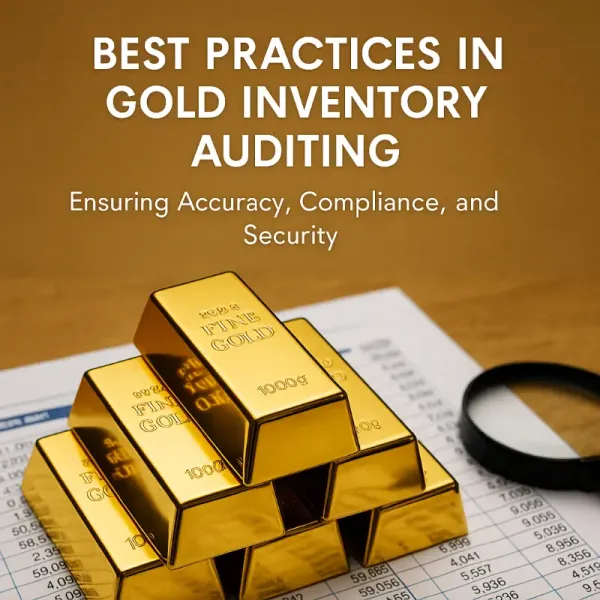
Take for example a firm called International Depository Services, which operates in several states in the U.S. – providing daily, monthly and annual auditing of vaults.
Daily auditing might include matching inflows or deliveries with the bookkeeping. Monthly might be a little more intrusive, like a random pull of bars to match serial numbers with allocated accounts.
An annual audit could include a full, top to bottom accounting as well as random purity sampling.
That’s the “gold standard” of vault auditing. And there’s zero reason that every gold vault shouldn’t undergo this kind of detailed audit – not just including, but especially the U.S. government’s gold holdings.
“Trust me, the gold is still there” is what every con artist says. An honest person or institution has no problem opening the books for full inspection.
Think about it this way: every publicly traded company has to file quarterly earnings reports with the SEC. Filing incorrect or inaccurate reports is fraud. No publicly traded company is allowed to get away with “trust us, we’re doing just fine.”
Every publicly traded company uses independent accounting firms to make sure their financial statements are on the up and up.
If we hold McDonald’s and Build a Bear to a standard of accounting and transparency about their finances and business operations, it seems like the U.S. government can and should be held to the same standard.
If this bill passes, I’ll be surprised. But I think if you encounter any individual or entity in your life that makes financial promises but refuses accountability, you should be leery of their claims.
That goes double for gold miners. There’s not a gold miner in my portfolios that I would recommend if they weren’t following strict protocol for reporting. It’s just too risky of a business to take a chance on a company based on “trust me” alone.
Best,
Garrett Goggin, CFA, CMT
Lead Analyst and Founder, Golden Portfolio