President Trump officially nominated Kevin Warsh to be the next Chairman of the Federal Reserve when Jerome Powell’s term runs out in May.
Trump has made it abundantly clear that he thinks rates need to be low with the stated purpose of juicing growth – and the heavily implied purpose of making Treasury debt cheaper in real terms, (lower rates mean lower interest payments to bondholders) and also by inflating the dollar.
Anyone paying attention to the trajectory of the Federal debt knows that we’ve been on this path for a long time.
The opportunity to rein in spending and reduce our deficits was decades ago. At this point there’s no path out of our debt that doesn’t include inflation. Think about it: do our politicians have the ability or the willingness to substantially raise taxes or cut spending?
Not a chance.
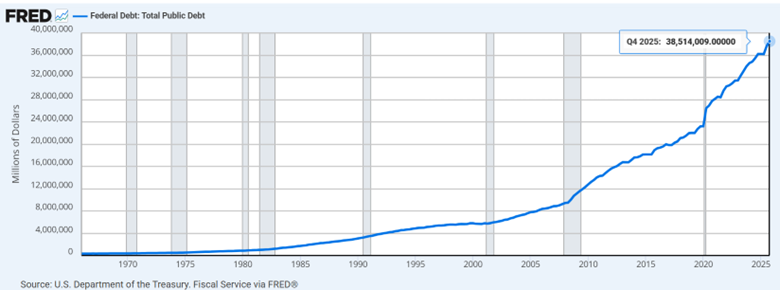
Debt is going to continue to rise along with spending. Federal interest expense is now a larger budget item than the military.
However you may feel about another regime change war in the middle east, we still haven’t come close to digging our way out of the hole we’re in from racking up massive debt loads from our previous wars in Iraq and Afghanistan.
How are we paying for it?
We’re not.
We’re just running the credit card – because hey, it’s still being accepted so why not?
And the biggest problem for our Federal budget hasn’t even kicked off. We’re just years away from bankrupting the Social Security fund at the same time that Medicare and Medicaid spending are slated to soar.
There’s no way out of this without inflating the hell out of the dollar, full stop.
Trump clearly believes Warsh is on board with easy money policy.
Back in December, he said his next Fed chair would be someone who “believes in lower interest rates, by a lot.”
And however Warsh may feel about it, there are not many options available to him. If he’s feeling monetarily conservative, he may merely keep rates where they are now.
Raising rates more than a token 25 basis points right now is almost impossible. Every 25 basis point increase would mean nearly $100 billion in additional interest payments on the $38 trillion Federal debt.
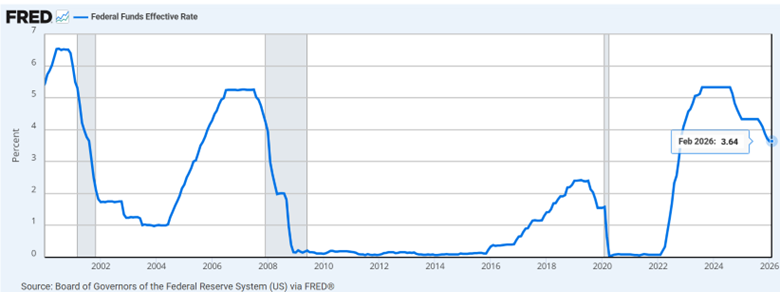
At the margins, lower rates make gold more attractive, because as a global monetary asset, gold competes with Treasuries. If Treasury yields fall too low, they’re basically guaranteed money losers after inflation.
Gold has no yield, but it also famously does not suffer from inflation, so all it has to do is to appear to be a better long term store of value than a Treasury that’s guaranteed to lose money…
People are speculating that Warsh may be more independent and have different ideas from Trump on monetary policy. But it doesn’t really matter.
There’s only one exit for the debt.
And gold is simply the best monetary asset to protect yourself from inflation.
Best,
Garrett Goggin, CFA, CMT
Lead Analyst and Founder, Golden Portfolio